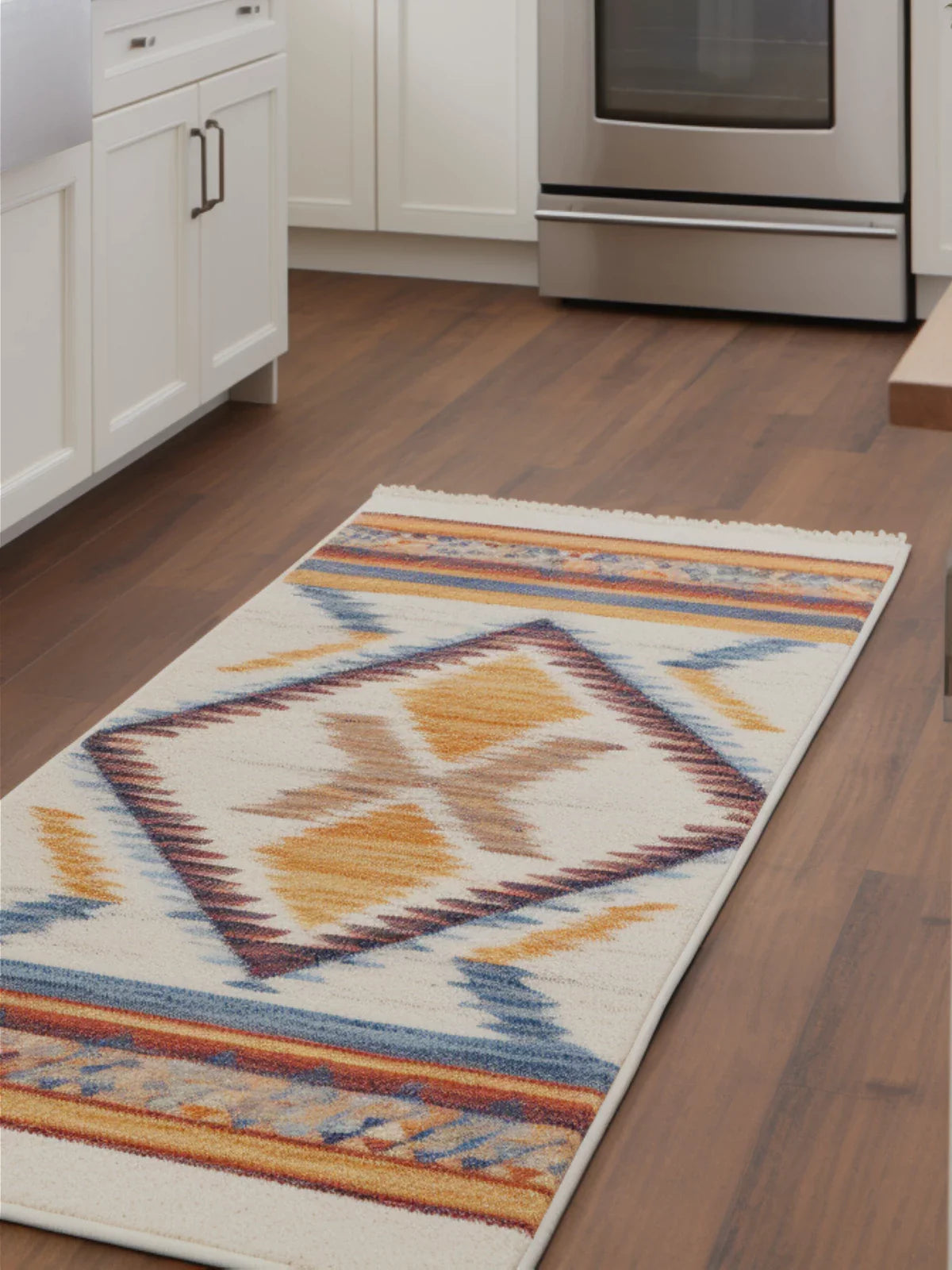
Optical Illusion: How to Widen Your Hallway with the Right Runner Rug Pattern
Have you ever walked into a narrow corridor and felt instantly cramped, only to visit another hallway of the exact same dimensions that somehow felt airy, open, and inviting? The difference rarely comes down to square footage or architectural magic. More often than not, it is the result of a masterful optical illusion.
In interior design, the floor is your fifth wall. Because the hallway is primarily a space you move through rather than sit in, the floor dominates your visual field. This makes your choice of flooring—specifically your area rug—the most powerful tool you have to manipulate the perception of space. If you are looking for the best hallway runner ideas, you must understand that the secret lies not just in the size or color of the rug, but profoundly in its pattern.
At Bella Rugs, we believe that smart design solves architectural problems. In this comprehensive guide, we are diving deep into the science of runner rug patterns. From the widening power of horizontal stripes to the framing effects of borders, here is how to master hallway runner design and use optical illusions to breathe life and width into your narrowest corridors.
1. The Directional Pull: Striped Patterns
Stripes are the oldest and most effective optical illusion in the design playbook. Depending on how they are oriented, stripes force the human eye to travel in a specific direction. In a hallway, you have two choices: horizontal or vertical.
Horizontal Stripes (The Ultimate Widener)
If your primary goal is to make a narrow hallway look wider, horizontal stripes (stripes that run side-to-side across the width of the runner) are your best friend. As you walk down the hall, your eye naturally wants to follow the lines left and right, toward the baseboards. This lateral eye movement tricks the brain into perceiving the floor area as significantly wider than it is.
Vertical Stripes (The Elongator)
Vertical stripes (stripes running lengthwise down the runner) draw the eye straight ahead to the end of the hall. This is an excellent choice if you have a very short, stubby hallway that you want to feel grander and longer. However, beware: if your hallway is already long and narrow, vertical stripes can exacerbate the "bowling alley" effect, making it feel like an endless, tight tunnel.
Design Pro Tip: If you love stripes but want a softer look, consider a chevron or herringbone pattern. The angled zig-zags provide lateral movement (widening the space) without the rigid formality of straight horizontal stripes.
2. Creating Depth: Geometric Patterns
Modern hallway runner design heavily features geometric patterns, and for good reason. Squares, diamonds, hexagons, and interlocking shapes do something magical to a flat floor: they create a sense of depth and rhythm.
The "Stepping Stone" Effect
When a geometric pattern repeats down a hallway, it creates a visual rhythm. Instead of looking at a single, overwhelmingly long stretch of floor, the brain processes the repeating shapes one by one. This breaks up the daunting length of the corridor into digestible, inviting "steps."
Diamonds vs. Squares
For narrow spaces, diamond patterns are particularly effective. Because the widest point of the diamond draws the eye outward, it mimics the widening effect of a horizontal stripe, but with a more dynamic, traditional, or bohemian aesthetic depending on the rug's style.
3. The Scale Factor: Large vs. Small Patterns
One of the most common mistakes people make when exploring hallway runner ideas is mismatching the scale of the pattern to the size of the space.
The Trap of Small, Busy Patterns
It seems logical: small space, small pattern. However, a "ditsy" or overly intricate small-scale floral pattern can backfire in a tight hallway. A highly detailed, small-scale rug requires the eye to work hard to process all the information. In a constrained space, this visual "noise" translates as clutter, making the hallway feel even more cramped and chaotic.
The Power of Large-Scale Patterns
To make a small space feel bigger, you need to think big. A large-scale pattern—whether it is a giant abstract motif, an oversized floral, or a massive geometric medallion—reads as bold and sweeping. Because there is more negative space between the design elements, the eye can rest. A large-scale pattern tells the brain, "This space is grand enough to hold a massive design," instantly elevating the perceived volume of the corridor.
4. The Border Debate: To Frame or Not to Frame?
Many traditional and vintage-style rugs feature a thick border running around the perimeter of the design. While beautiful in a large dining room or living room, a border behaves very differently in a narrow hallway.
Why Borders Constrain
A thick border acts like a picture frame. It draws a hard, definitive line that says, "The design stops here." In a narrow hallway, a border highlights exactly how thin the runner is, which in turn reminds you of how narrow the walls are.
The "Edge-to-Edge" Solution
If you want to maximize width, opt for a borderless, edge-to-edge pattern (also known as an "all-over" pattern). When a design (like a fading vintage motif or an abstract wash) continues right off the edge of the rug without a framing border, the brain assumes the pattern—and the floor—keeps going. This "bleeding" effect visually dissolves the boundaries of the rug, pushing the walls outward.
5. Color Contrast in Runner Rug Patterns
The contrast within the pattern itself plays a major role in how the rug affects the room's proportions.
- High Contrast (e.g., Black and White): High-contrast patterns are punchy and demand attention. While striking, they advance toward the eye. If used in a narrow, dark hallway, a stark black-and-white geometric rug can feel overwhelming and visually raise the floor, making the ceiling feel lower.
- Low Contrast / Tonal (e.g., Cream and Beige): Tonal patterns—where the design and the background are variations of the same color family—are expansive. A beige pattern on a cream background adds the necessary texture and interest to hide footprints, but it remains soft and recedes from the eye, keeping the hallway light, airy, and visually open.
6. Practicality Meets Illusion: The Bella Rugs Standard
An optical illusion is useless if the rug doesn't function properly in your daily life. Hallways are high-traffic zones, meaning your runner must be built to survive.
Whether you choose our ultra-low profile, 3-layer padded Cotton (perfect for doors with low clearance) or our textured, 1600g Chenille chenille (equipped with an integrated dotted non-slip backing for ultimate stability), you are getting a rug that stays perfectly flat. A rug that bunches, wrinkles, or curls at the corners ruins the visual illusion of a clean, expansive floor.
Furthermore, because hallway runners endure dirty shoes and muddy paws, all our designs are 100% machine-washable at 30°C (86°F) and fully compatible with your daily robot vacuum runs.
The Cheat Sheet: Which Pattern Do You Need?
| Hallway Problem | The Optical Illusion Solution | Pattern to Avoid |
|---|---|---|
| Too Narrow (Cramped) | Horizontal Stripes, Chevrons, Edge-to-Edge | Vertical Stripes, Thick Borders |
| Too Short (Stubby) | Vertical Stripes, Long Geometric Rhythms | Horizontal Stripes |
| Feels Cluttered / Chaotic | Large-Scale Patterns, Tonal Colors (Low Contrast) | Tiny, Ditsy Florals, High Contrast |
| Too Dark | Light Neutrals, Faded Vintage All-Over Prints | Dark Solids, Heavy Framed Borders |
Frequently Asked Questions: Hallway Runner Design
Q: Should my hallway runner match my living room rug?
A: They do not need to match perfectly, but they should "speak the same language." If your living room features a warm, vintage aesthetic, carrying a similar color palette or a faded edge-to-edge motif into the hallway creates a cohesive flow that makes the whole house feel larger.
Q: How much floor should show around my runner?
A: The golden rule of runner rug patterns and placement is to leave 2 to 4 inches of bare hard floor visible on both sides of the runner. This framing effect is crucial; if the rug touches the walls, it looks like wall-to-wall carpet and shrinks the space.
Q: Are patterned runners better for hiding dirt?
A: Absolutely. An all-over geometric, vintage, or floral pattern is significantly better at camouflaging daily dust, pet hair, and minor scuffs than a solid color rug. Combined with machine-washability, it is the ultimate low-maintenance choice.
Master Your Hallway Today
You don't need a sledgehammer to make your hallway feel wider; you just need the right design strategy. By leveraging the optical illusions of horizontal stripes, large-scale motifs, and borderless edges, you can transform a cramped corridor into a grand entrance.
Explore the stunning variety of meticulously engineered, machine-washable runners at Bella Rugs and find the perfect pattern to expand your space today.
The Perfect Rug Selection Guide for Robot Vacuum Users: Stop the Snags and Jams
The Unsung Hero of Home Safety: Why Non-Slip Backed Rugs are Essential for Wood and Tile Floors
Related Posts

How to Remove Pet Hair from Rugs: The Ultimate Washable Solution

Best Rug Colors for Dark Rooms: How to Brighten and Balance Your Space

Best Rug Colors for Small Rooms: How to Make Your Space Feel Larger

Best Rugs for Cold Floors: Warming Up Tile, Hardwood, and Laminate

Winter Living Room Decorating Ideas with Rugs: Creating a Cozy Haven

Machine Washable Rugs for Rainy & Snowy Seasons: The Ultimate Home Survival Guide

Best Bedroom Rugs for Winter Comfort: Creating a Warm Sleep Sanctuary