Don't Turn Your Corridor Into a Tunnel: 5 Narrow Hallway Decorating Mistakes to Avoid
We have all experienced it: walking into a home that is beautifully decorated in the living room and bedroom, but to get between them, you have to pass through a dark, cramped, and uninviting corridor. Hallways are the connective tissue of our homes, yet they are frequently an afterthought in interior design. When neglected or decorated incorrectly, a hallway quickly stops feeling like a part of your home and starts feeling like a claustrophobic tunnel.
Decorating a narrow, windowless space requires a specific set of rules. If you break them, the walls visually close in, the ceiling feels lower, and the space becomes stressful to walk through. If you want to elevate your home's aesthetic, you must be aware of the most common hallway decorating mistakes.
At Bella Rugs, we know that the right foundational choices can completely alter the perception of space. In this expert guide, we are breaking down the five most frequent hallway design errors—from choosing the wrong runner size to overcrowding your walls—and showing you exactly how to fix them.
1. The "Black Hole" Effect: Choosing Excessively Dark Rugs
One of the most severe narrow hallway mistakes is laying down a dark, heavy runner rug. In a space that already lacks natural light, the floor is your greatest asset for bouncing ambient light around the room.
Why Dark Rugs Fail in Hallways
Colors with a very low Light Reflectance Value (LRV), such as deep navy, charcoal, or dark brown, absorb whatever light hits them. When you place a dark rug in a narrow corridor, it acts as a visual anchor that pulls the eye downward. This creates a "black hole" effect, making the floor feel heavy and the walls feel closer together.
The Bella Rugs Fix
Many homeowners make this mistake out of fear. They think: "Hallways get dirty shoes; therefore, I must buy a dark rug to hide the dirt." This is a myth born from the era of hard-to-clean carpets.
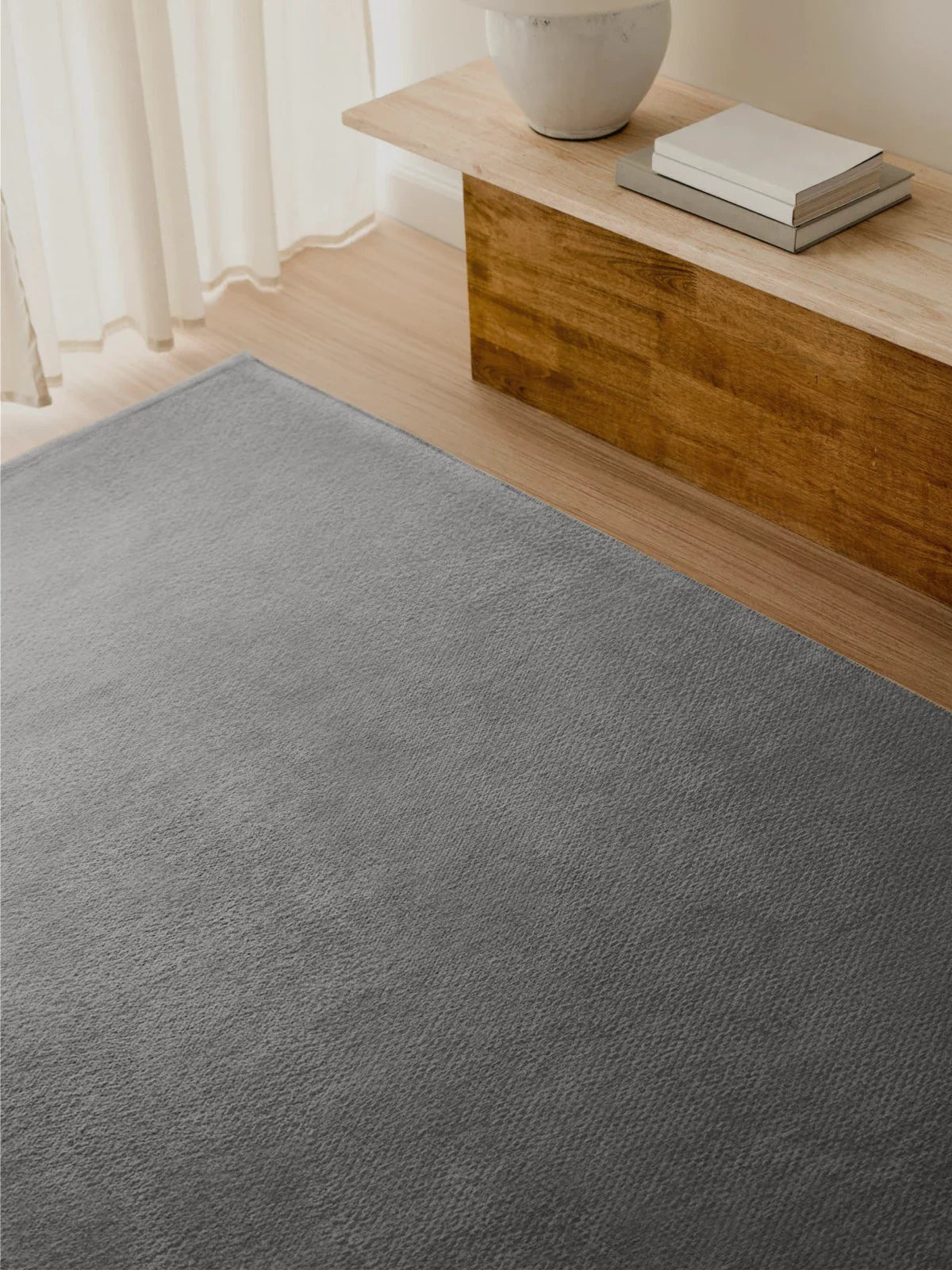
With our engineered floor coverings, you can confidently choose light, space-expanding colors like ivory, soft cream, or greige. Both our 3-layer padded Cotton and our premium textured Chenille rugs are 100% machine-washable at 30°C (86°F). When your light-colored runner gets dirty, simply toss it in the wash. You no longer have to sacrifice the brightness of your hallway out of a fear of footprints.
2. The Suffocation Trap: Getting the Runner Size Wrong
A runner rug is the ultimate tool for a hallway, but choosing the wrong dimensions is a classic design error that will instantly ruin the proportions of the space.
The "Wall-to-Wall" Mistake (Too Wide)
If you buy a runner that is too wide, touching the baseboards on either side, it creates a suffocating wall-to-wall carpet look. Without the visual break of the hard floor underneath, the brain registers the exact, narrow width of the rug as the absolute width of the room, making it feel incredibly cramped.
The "Postage Stamp" Mistake (Too Short)
Conversely, placing a tiny 3-foot rug in the middle of a 10-foot hallway chops the visual length of the floor into disjointed pieces, interrupting the flow and making the space feel stunted.
The Golden Rule of Sizing
To avoid these hallway design errors, follow the rule of framing. You must leave 2 to 4 inches of bare floor visible on both sides of the runner, and leave a few inches of bare floor at both ends of the hallway. This framing effect acts as a border that visually pushes the walls outward and allows the hallway to "breathe."
3. Overwhelming the Floor: Excessively Large or Heavy Patterns
While we love patterns, scale is everything in a narrow space. A common mistake is falling in love with a rug pattern that is simply too massive or visually heavy for a confined corridor.
When Big Goes Wrong
While moderately scaled patterns can create a sense of expansiveness, an excessively large, chunky, or high-contrast geometric pattern (think massive, bold black-and-white chevron stripes) can dominate the floor. In a narrow hallway, a massive pattern cannot be fully appreciated because you cannot step back to view it. Instead, it screams for attention, creating visual noise that makes the hallway feel chaotic and tight.
The Proportionate Fix
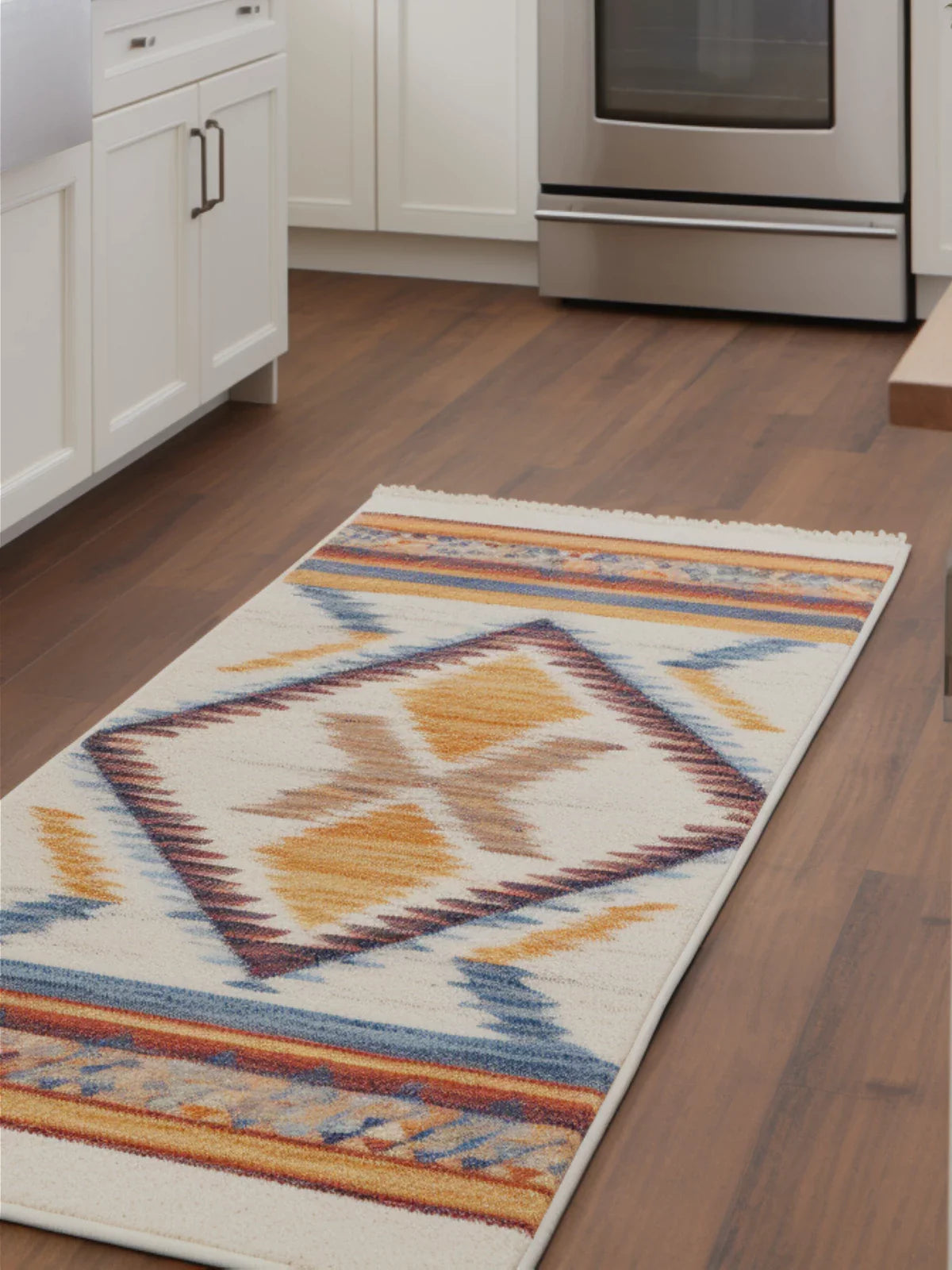
Opt for patterns that offer detail without dominance. A faded vintage motif, a subtle tonal geometric, or an edge-to-edge distressed design offers the perfect balance. It provides enough visual interest to hide daily wear and tear, but remains soft enough to recede from the eye, keeping the hallway feeling open and serene.
4. The Cave Vibe: Poor and Flat Lighting
You can have the most beautiful, perfectly sized light runner in the world, but if your lighting is wrong, your hallway will still feel like a tunnel.
The Single-Bulb Error
Relying on a single, flush-mount ceiling light in the center of a long hallway is a massive mistake. This casts a pool of light in the middle but leaves the ends of the hallway and the lower corners in deep shadow, accentuating the tunnel effect.
Layering the Light
To widen the space, you need to wash the walls with light. Install multiple fixtures down the length of the hall. If possible, use wall sconces that cast light both upward and downward. This trick eliminates shadows and visually pushes the walls back. Pair this layered lighting with a beautifully printed Cotton runner, and the light will bounce off the smooth fabric surface perfectly.
5. The Obstacle Course: Overcrowding the Walls and Floor
When space is at a premium, people often try to utilize their hallway walls for storage or massive art displays. This is one of the most fatal narrow hallway mistakes.
The "Funhouse" Gallery Wall
Covering both sides of a narrow hallway floor-to-ceiling with picture frames creates a chaotic, overwhelming "funhouse" effect. As you walk down the hall, the frames protrude into your peripheral vision, making the walls feel like they are closing in on you.
Bulky Floor Furniture
Placing heavy shoe racks, deep console tables, or bulky benches on the floor physically narrows the walkable path. It forces you to zig-zag down the hallway, turning a simple corridor into an obstacle course.
The Minimalist Fix
If you want art, keep it curated and confined to one wall, using matching frames to reduce visual clutter. If you need storage, use shallow, floating wall shelves instead of furniture with legs. By keeping the floor entirely clear (save for your beautiful, low-profile runner), you maintain a clean, unobstructed visual line from one end of the hall to the other.
Summary: Hallway Decorating Mistakes vs. Solutions
| The Design Error | The Negative Effect | The Expert Solution |
|---|---|---|
| Dark, Heavy Rugs | Absorbs light; creates a "black hole" effect | Use light creams/ivories; ensure they are machine washable. |
| Wall-to-Wall Runner | Suffocates the floor; emphasizes narrowness | Leave 2-4 inches of bare floor on all sides for framing. |
| Overwhelming Patterns | Creates visual chaos; dominates the space | Use subtle, faded, or tonal patterns that recede visually. |
| Single Ceiling Light | Casts deep shadows in corners | Use multiple fixtures or wall sconces to wash walls with light. |
| Bulky Floor Furniture | Creates an obstacle course; physically narrows the path | Use floating shelves and keep the floor space completely clear. |
Frequently Asked Questions: Hallway Troubleshooting
Q: My hallway doors have very low clearance. What rug should I use?
A: This is a common issue that causes rugs to bunch up. Avoid thick Chenille or shag rugs. Instead, choose our 3-layer Cotton rugs. Their smooth printed fabric top and 4 mm sponge core provide a cushioned feel while maintaining an ultra-low profile that standard doors can easily glide over.
Q: How can I stop my hallway runner from slipping when I walk on it?
A: A slipping rug is a major safety hazard in a hallway. If you have very slick floors like polished tile or smooth hardwood, opt for our Chenille rugs, which feature an integrated dotted non-slip backing. If you prefer the Cotton, simply pair it with a high-quality rug pad.
Q: Can a mirror really fix a narrow hallway?
A: Yes! Placing a large mirror on one of the long walls instantly creates the illusion of a wider space by reflecting light and duplicating the visual depth of the opposite wall. Pair it with a light-colored runner for maximum effect.
Transform Your Space
Your hallway sets the tone for your entire home. Don't let simple hallway design errors turn your beautiful corridors into dark tunnels. By choosing the right size, color, and pattern for your runner, and keeping your walls clutter-free, you can create a space that feels expansive, welcoming, and intentionally designed.
Explore the stunning variety of meticulously engineered, machine-washable runners at Bella Rugs and fix your hallway dilemmas today.
The Ultimate Runner Rug Size Guide for Hallways: Perfect Proportions for Every Space
The Ultimate Bedroom Luxury: Why Sponge-Padded Cotton Rugs Are the Best Choice for Underfoot Comfort
Related Posts

Non-Toxic Rug Materials Explained: What Is Really Hiding in Your Floor Decor?

Creative Personalized Rug Ideas for Kids' Bedrooms: Magic Underfoot

Best Rugs for Playrooms: Designing a Fun, Washable, and Safe Space

Kids Room Rug Buying Guide: How to Choose the Perfect Washable Rug

Why Personalized Name Rugs Make the Perfect Baby Shower Gift

How to Design the Perfect Personalized Kids Rug: A Step-by-Step Guide

Personalized Rugs vs. Regular Kids Rugs: Which Is Actually Worth It?