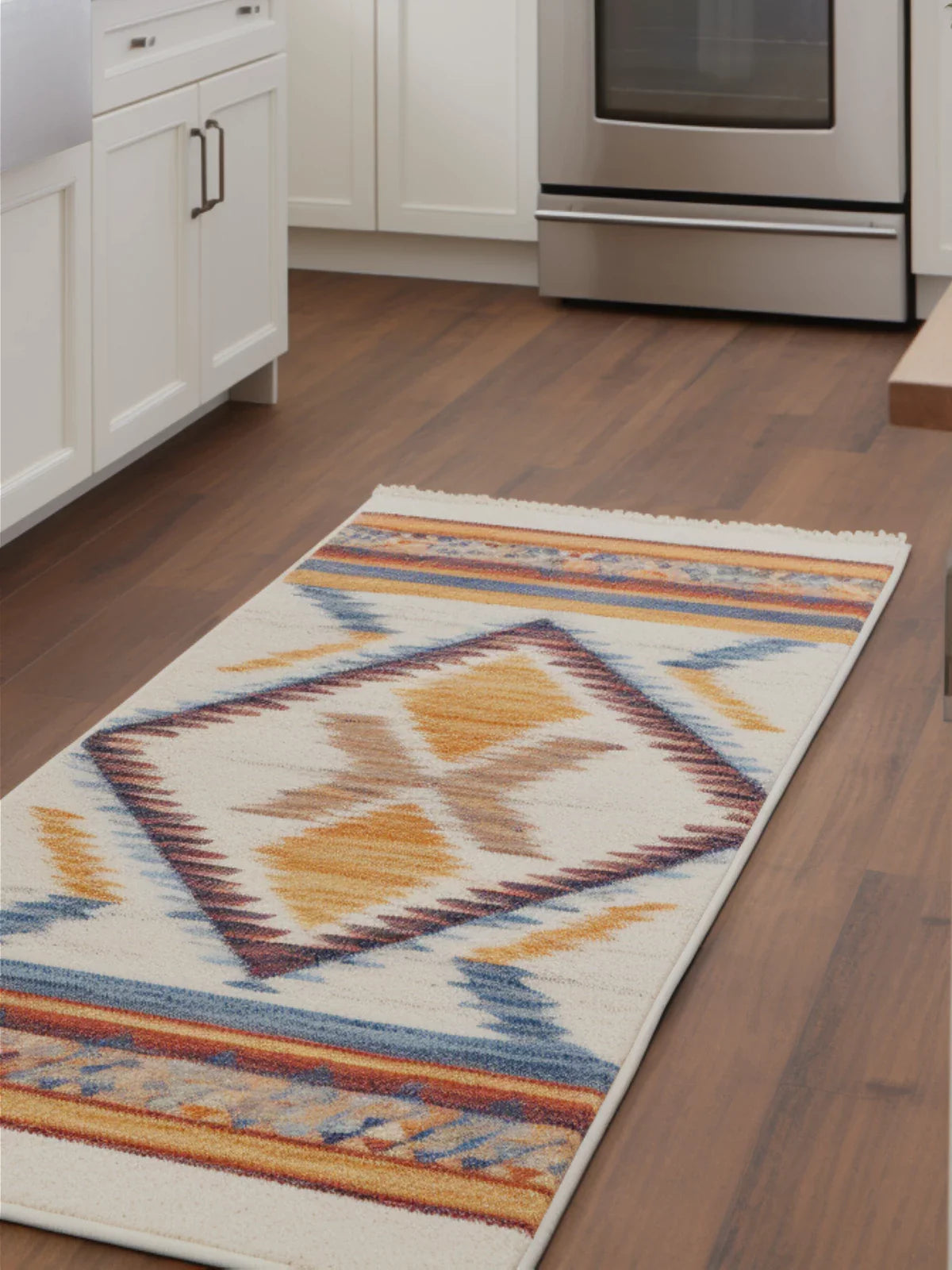
The Ultimate Runner Rug Size Guide for Hallways: Perfect Proportions for Every Space
When it comes to interior design, hallways present a unique set of challenges. They are the transitional arteries of our homes, guiding us from the entryway to the living room or from public spaces to private bedrooms. Because they are strictly functional pathways, they rarely feature furniture or architectural focal points. This leaves the floor as your primary canvas for design.
You may have found the most beautiful, meticulously patterned rug in the world, but if the dimensions are wrong, the entire aesthetic collapses. A runner that is too small looks like a misplaced bath mat floating in an ocean of hardwood. A runner that is too large suffocates the space, creating a cramped, wall-to-wall carpet effect that makes your hallway feel narrower than it actually is.
At Bella Rugs, we know that precision is the secret to a high-end look. Proportion is everything. In this comprehensive, expert-led size guide, we will break down the exact math you need to measure your hallway perfectly. From calculating the ideal borders to handling tricky door clearances and exceptionally long corridors, here is everything you need to know about runner rug sizes.
1. The Golden Rule of Hallways: The "Breathing Room"
Before you even pick up a tape measure, you must understand the fundamental concept of "breathing room." A runner rug should never, under any circumstances, touch the baseboards or walls of your hallway. The beauty of a runner lies in its ability to highlight and frame your hard flooring, not cover it entirely.
The Framing Ratio
To create the optical illusion of a wider, more expansive hallway, you must leave a visible border of bare floor (wood, tile, or laminate) on all sides of the rug. This exposed floor acts as a frame, defining the walkway and giving the eye space to rest.
The Width Clearance
You should aim to leave a minimum of 2 inches (5 cm) and a maximum of 6 inches (15 cm) of bare floor visible on both sides of the runner. For the average home, leaving exactly 4 inches (10 cm) on the left and 4 inches (10 cm) on the right provides the most balanced, professional look.
The Length Clearance
The ends of your runner also need space to breathe. You should never run a rug perfectly flush against the end wall or the front door. Leave a minimum of 6 inches (15 cm) up to 24 inches (61 cm) of bare floor at both ends of the corridor.
2. Calculating the Perfect Width
Getting the width right is crucial for safety and aesthetics. If a runner is too wide, your hallway feels like a tunnel. If it is too narrow, you will constantly be stepping on and off the edges, which is uncomfortable and causes the rug to wear out unevenly.
Standard Hallway Dimensions
The standard residential hallway in modern homes is typically 36 inches (91 cm) to 48 inches (122 cm) wide. Older or historic homes might feature narrower corridors around 32 inches (81 cm) wide.
The Width Formula
To find your ideal runner width, simply measure your hallway from wall to wall and subtract 4 to 8 inches (10 to 20 cm) from the total. This accounts for the 2 to 4 inches (5 to 10 cm) of clearance you need on each side.
For Narrow Hallways: The 24-Inch (61 cm) Runner
If your hallway is only 32 to 36 inches (81 to 91 cm) wide, a slim runner is required. A rug that is approximately 24 inches (61 cm) wide will give you a beautiful 4-inch to 6-inch (10 to 15 cm) border on both sides, keeping the narrow space feeling open and unobstructed.
For Standard Hallways: The 30-Inch to 36-Inch (76 cm to 91 cm) Runner
If you have a standard 40-inch to 48-inch (101 to 122 cm) wide corridor, you have more flexibility. A runner width of 30 inches (76 cm) or 36 inches (91 cm) is considered the industry standard and will provide the perfect proportion of rug-to-floor ratio.
3. Calculating the Perfect Length
Length is where many homeowners get confused, especially if they have an exceptionally long or irregularly shaped corridor.
The Length Formula
Measure the entire length of the hallway. Subtract 12 to 24 inches (30 to 61 cm) from the total length. This ensures you have 6 to 12 inches (15 to 30 cm) of bare floor at both ends. For example, if your hallway is 120 inches (305 cm) long, an ideal runner length would be 96 inches (244 cm) to 108 inches (274 cm).
Standard Runner Lengths
When shopping, you will typically find runner lengths falling into these standard categories:
- 6 Feet / 72 inches (183 cm): Perfect for short transition spaces, like the area between a bedroom and a bathroom.
- 8 Feet / 96 inches (244 cm): The most common length for standard residential hallways.
- 10 Feet / 120 inches (305 cm): Ideal for longer corridors in open-concept homes.
- 12 Feet / 144 inches (366 cm): Designed for grand entryways and extended traditional hallways.
Handling Extra-Long Corridors
What if your hallway is 20 feet (240 inches / 609 cm) long? While you can occasionally find custom-cut runners of this size, interior designers usually advise against using one massive rug. A single, never-ending runner emphasizes the "bowling alley" effect, making the hallway feel dauntingly long.
The Multi-Rug Strategy
For exceptionally long hallways, the best design secret is to break the space up by using two or even three standard-sized runners with a gap between them. For instance, using two 96-inch (244 cm) runners with a 12-inch (30 cm) gap of bare floor between them creates a visual rhythm. It breaks the long tunnel into digestible, inviting zones. If you do this, ensure the rugs are identical in pattern and color for a cohesive look.
4. Navigating Architectural Obstacles
Hallways are rarely perfectly empty boxes. You have to account for doors, furniture, and structural elements before finalizing your runner size.
Door Clearances
Take note of every door that opens into the hallway (closet doors, bedroom doors, or the front entry door). If your runner is too thick, the bottom of the door will catch on the rug every time it is opened, causing frustration and eventually ruining the edges of your rug.
The Low-Profile Solution
This is where your choice of rug construction is vital. If door clearance is tight, avoid thick shags or heavy wool. Instead, opt for our 3-layer Cotton construction. With its 4 mm sponge-padded core, it offers incredible softness underfoot while maintaining an ultra-low profile that standard doors can effortlessly glide over. If stability is your main concern on a slippery floor, our 2-layer Chenille rugs offer a heavy 1600g weight with an integrated non-slip backing, keeping the runner firmly planted even in high-traffic zones.
Furniture in the Hallway
If your hallway is wide enough to accommodate a slim console table, a shoe rack, or a bench, you must decide how the rug interacts with the furniture legs. In living rooms, the rule is usually "front legs on the rug." In hallways, the rule is the exact opposite.
The "All Off" Furniture Rule
In a corridor, furniture legs should stay completely off the runner. Placing furniture half-on and half-off a narrow runner creates a tripping hazard, makes the rug look lopsided, and disrupts the clean visual pathway. Size your rug so that it runs parallel to the console table, leaving at least 1 to 2 inches (2.5 to 5 cm) of space between the edge of the rug and the front legs of the furniture.
Floor Vents and Registers
Never cover a heating or cooling floor vent with your runner. Covering vents is a fire hazard and drastically reduces the energy efficiency of your home. If a vent is in the middle of your hallway, measure your rug length so that it stops 2 to 3 inches (5 to 7 cm) before the vent, or use the multi-rug strategy to leave a gap exactly where the register is located.
5. Quick Reference: Hallway to Runner Sizing Cheat Sheet
Use this handy chart to instantly find the recommended runner dimensions based on your hallway's total size. Remember, these recommendations account for the necessary 2 to 4 inches (5 to 10 cm) of side clearance and end framing.
| Total Hallway Dimensions (Width x Length) | Recommended Runner Width | Recommended Runner Length |
|---|---|---|
| 36" x 96" (91 cm x 244 cm) | 24" to 28" (61 cm to 71 cm) | 72" (183 cm) |
| 42" x 120" (106 cm x 305 cm) | 30" to 34" (76 cm to 86 cm) | 96" (244 cm) |
| 48" x 144" (122 cm x 366 cm) | 36" to 40" (91 cm x 101 cm) | 120" (305 cm) |
| 48" x 240" (122 cm x 609 cm) | 36" to 40" (91 cm x 101 cm) | Two 96" (244 cm) runners with a gap |
6. Frequently Asked Questions About Runner Sizes
Q: Can a runner be wider than my front door?
A: If you are placing a runner in your entryway hallway, the width of the rug should ideally match the width of the front door or be slightly wider. It should never be narrower than the doorframe, as this looks disproportionate and fails to capture all the foot traffic entering the home.
Q: Is it okay if my runner is slightly off-center?
A: Visually, a runner should be perfectly centered between the two walls of the hallway to maintain symmetry. The only exception is if you have a piece of furniture (like a heavy bench) against one wall. In that case, center the runner in the remaining walkable space between the furniture and the opposite wall.
Q: What if my hallway is L-shaped?
A: For L-shaped or T-shaped corridors, do not try to bend a rug or overlap them awkwardly. Instead, use two separate runners. Place one runner down the main stretch, and a second runner down the connecting hall. Leave a square of bare floor where the two hallways intersect to keep the corners looking clean and intentional.
Measure Twice, Style Once
A perfectly sized runner is the difference between a hallway that feels like an afterthought and one that feels like a curated, high-end gallery space. By respecting the golden rules of clearance, calculating your widths and lengths carefully, and choosing the right low-profile construction for your doors, you can elevate your home’s transitions flawlessly.
Grab your tape measure, map out your dimensions, and explore the meticulously engineered, machine-washable runner collections at Bella Rugs to find the perfect fit for your home.
The Unsung Hero of Home Safety: Why Non-Slip Backed Rugs are Essential for Wood and Tile Floors
Don't Turn Your Corridor Into a Tunnel: 5 Narrow Hallway Decorating Mistakes to Avoid
Related Posts

Non-Toxic Rug Materials Explained: What Is Really Hiding in Your Floor Decor?

Creative Personalized Rug Ideas for Kids' Bedrooms: Magic Underfoot

Best Rugs for Playrooms: Designing a Fun, Washable, and Safe Space

Kids Room Rug Buying Guide: How to Choose the Perfect Washable Rug

Why Personalized Name Rugs Make the Perfect Baby Shower Gift

How to Design the Perfect Personalized Kids Rug: A Step-by-Step Guide

Personalized Rugs vs. Regular Kids Rugs: Which Is Actually Worth It?