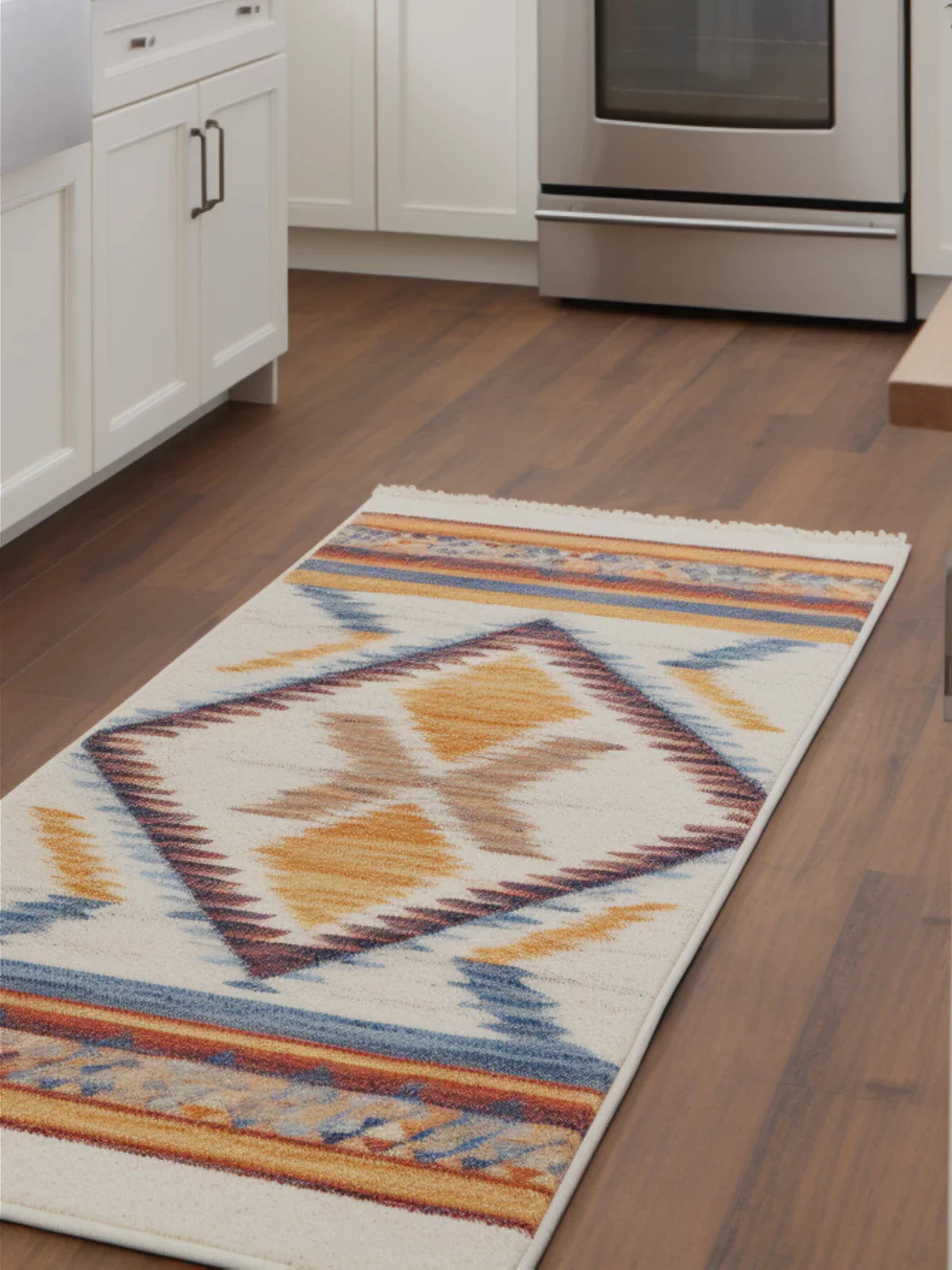
Hallway Runner Size Guide: Choose the Right Fit
A hallway runner can transform an ordinary corridor into a stylish, welcoming passage while also protecting your flooring from daily wear and tear. However, choosing the right hallway runner rug size is more than just picking a length that fits between your front door and back wall. The width, length, and placement of a runner all play important roles in how balanced and functional your corridor feels. Understanding how to measure your hallway and match it to an appropriate runner size ensures that your rug enhances your home rather than awkwardly dominating or disappearing into the space.
Why Hallway Runners Matter: Function and Design
Hallway runners serve several practical and aesthetic purposes. They reduce noise from footsteps, add visual interest to a passage that might otherwise feel plain, and protect your flooring in one of the highest-traffic areas of your home. A well-sized runner also helps define the corridor as a distinct zone, creating a sense of intentional design rather than leaving the space feeling neglected or cluttered.
The key to a successful hallway runner is proportion. A runner that is too wide can feel cramped and restrict foot traffic. One that is too narrow may look lost or fail to visually anchor the space. Similarly, a runner that is too short might not provide meaningful floor protection or visual flow, while one that is too long could interfere with doors or create tripping hazards. Getting these proportions right begins with understanding your hallway's dimensions and layout.
How to Measure Your Hallway Accurately
Before you shop for a hallway runner, gather basic measurements of your corridor. You will need a measuring tape and a notebook to record the following:
- Hallway length: Measure from one end of the hallway to the other, or from a doorway to the point where the hallway meets another room or corridor.
- Hallway width: Measure across the hallway from wall to wall at a few different points to check for any variations in width.
- Door and doorway placement: Note the location and swing direction of all doors opening into the hallway. Measure the distance from doorframes to nearby walls or corners.
- Intersecting corridors or alcoves: If your hallway branches or has wall openings, measure these areas separately and note their position along the main corridor.
- Wall-mounted items: Take note of baseboards, radiators, built-in shelving, or other features that may affect runner placement.
Having these measurements on hand will help you make confident decisions about runner dimensions and prevent the common mistake of purchasing a rug that does not fit your actual space.
Understanding Runner Width: The Border Balance
One of the most important aspects of hallway runner sizing is choosing the correct width. The ideal runner width depends on your hallway width and how much visible flooring you want to remain on each side of the runner.
As a general principle, a hallway runner should leave a visible floor border of roughly 6 to 12 inches (15 to 30 cm) on each side. This border serves multiple purposes: it prevents the runner from appearing cramped, allows doors to swing freely without snagging the rug, and maintains visual balance in the corridor.
To calculate a suitable runner width for your hallway, use this simple formula:
Hallway width minus 12 to 24 inches (30 to 60 cm) equals your ideal runner width.
For example, if your hallway is 3 feet (90 cm) wide, subtract 12 to 24 inches (30 to 60 cm) to arrive at a runner width of roughly 24 to 36 inches (60 to 90 cm). Most hallway runners are sold in standard widths of 2 feet (60 cm), 2.5 feet (75 cm), or 3 feet (90 cm), so this calculation will help you identify which standard width best suits your space.
If your hallway is particularly narrow (less than 3 feet or 90 cm wide), a 2-foot (60 cm) runner is usually the safest choice. If your hallway is wider than 4 feet (120 cm), you may have the flexibility to use a 2.5-foot (75 cm) or 3-foot (90 cm) runner while still maintaining adequate floor borders on each side.
Choosing Runner Length for Different Hallway Layouts
Short Hallways
Short hallways, typically 6 to 10 feet (180 to 300 cm) long, usually work best with a single runner. A 2-foot by 5-foot (60 x 150 cm) or 2-foot by 6-foot (60 x 180 cm) runner is often ideal for these spaces. When placing a runner in a short hallway, position it to protect the central traffic zone while leaving at least 12 to 18 inches (30 to 45 cm) of exposed flooring at each end. This prevents the runner from appearing to stretch the full length of the corridor, which can make a short hallway feel even more narrow.
Standard-Length Hallways
Standard hallways, measuring 10 to 15 feet (300 to 450 cm), are the most common residential corridor length. For these spaces, a 2-foot by 8-foot (60 x 240 cm) or 3-foot by 8-foot (90 x 240 cm) runner provides excellent coverage without overwhelming the space. These dimensions protect the main traffic lane while leaving some visual breathing room at each end.
Long Hallways
Long hallways, extending beyond 15 feet (450 cm), present unique sizing challenges. A single very long runner is often impractical because most standard runners max out at around 9 feet (270 cm) in length. Instead, consider one of the following strategies:
- Use a single long runner (such as a 2-foot by 9-foot or 60 x 270 cm runner) positioned in the highest-traffic section, and leave the remaining hallway uncovered.
- Place two smaller runners end-to-end, allowing a small gap between them for visual rhythm and ease of cleaning.
- Use a single runner in the central third of the hallway, where foot traffic is typically most concentrated.
Avoid trying to fill the entire length of a very long hallway with a single runner, as this creates a visual that feels more like a carpet installation than a decorative rug placement.
Runner Sizing Reference Table
| Hallway Width | Recommended Runner Width | Short Hallway (6–10 ft) | Standard Hallway (10–15 ft) | Long Hallway (15+ ft) |
| 2.5 to 3 ft wide (75–90 cm) | 2 ft (60 cm) | 2' x 5' (60 x 150 cm) | 2' x 8' (60 x 240 cm) | 2' x 9' (60 x 270 cm) or two 2' x 5' runners |
| 3 to 3.5 ft wide (90–105 cm) | 2 to 2.5 ft (60–75 cm) | 2.5' x 5' (75 x 150 cm) | 2.5' x 8' (75 x 240 cm) | 2.5' x 9' (75 x 270 cm) or two 2.5' x 5' runners |
| 3.5 to 4 ft wide (105–120 cm) | 2.5 to 3 ft (75–90 cm) | 3' x 5' (90 x 150 cm) | 3' x 8' (90 x 240 cm) | 3' x 9' (90 x 270 cm) or two 3' x 5' runners |
| 4 ft or wider (120+ cm) | 3 ft (90 cm) | 3' x 6' (90 x 180 cm) | 3' x 8' (90 x 240 cm) | 3' x 9' (90 x 270 cm) or custom arrangement |
Hallway Layout and Placement Guide
| Hallway Type | Characteristics | Recommended Runner Width | Recommended Length | Placement Tips |
| Narrow Hallway | Less than 3 ft (90 cm) wide; tight feel | 2 ft (60 cm) | 5–8 ft (150–240 cm) | Center the runner and maintain 6–12 inches (15–30 cm) floor border on each side. Avoid runners wider than 2 ft (60 cm) to prevent cramping. |
| Long Hallway | 15+ ft (450+ cm) long; extends across multiple rooms | 2–3 ft (60–90 cm) | 5–9 ft (150–270 cm) per section | Position one runner in the highest-traffic zone rather than attempting to cover the full length. Consider multiple smaller runners with gaps for visual rhythm. Ensure ample clearance at doors and intersections. |
| Short Hallway | 6–10 ft (180–300 cm) long; connects two adjacent rooms | 2–3 ft (60–90 cm) | 4–6 ft (120–180 cm) | Leave 12–18 inches (30–45 cm) of exposed flooring at each end to avoid making the corridor feel enclosed. Center the runner horizontally. |
| Hallway with Multiple Doors | Doors open into the corridor at different points; frequent entry and exit | 2–3 ft (60–90 cm) | Position around main door entry points | Avoid placing the runner directly in front of swinging doors. Ensure at least 18–24 inches (45–60 cm) of clearance from doorframes. Consider running the rug perpendicular to the direction of main foot traffic if doors are positioned on one side. |
| Hallway with Alcoves or Intersections | Corridor branches into another passage or features wall indentations | Match main corridor width minus 12 inches (30 cm) | Extend through main path; avoid alcove areas | Keep the runner within the main hallway path and do not extend it into branching corridors or recessed areas unless those areas are part of a unified traffic zone. Use runner placement to define the primary corridor distinct from secondary passages. |
Door Clearance and Safe Placement
Doors are one of the most important factors to consider when sizing and positioning a hallway runner. A poorly placed runner can interfere with door operation and create safety hazards. Here are the key clearance guidelines:
- Leave at least 18 to 24 inches (45 to 60 cm) of clear flooring in front of any door that opens into the hallway, measured from the doorframe edge.
- Position the runner so that door swings do not drag across or bunch up the rug edge.
- If a hallway has doors opening on only one side, you can offset the runner slightly toward the opposite wall, maintaining visual balance while protecting the clear zone in front of doors.
- For hallways with doors on both sides, center the runner and ensure equal clearance distances in front of all doors.
- If a hallway narrows near a doorway or has an offset, adjust your runner width calculation to account for these variations.
Taking time to map out door locations before purchasing a runner will help you avoid returns and ensure safe, unobstructed passage through your home.
Runner Patterns, Color, and Visual Perception
Beyond size and length, the design elements of a runner also influence how a hallway feels. Certain patterns and colors can visually alter the perceived proportions of a corridor.
Patterns and Direction: Runners with linear or striped patterns that run lengthwise can make a hallway appear longer, while cross-pattern or geometric designs may emphasize width. Directional patterns should typically run along the length of the hallway to enhance the sense of flow and movement through the space.
Color and Border Effects: Light-colored runners can make narrow hallways feel more spacious, while dark or jewel-toned runners add warmth and definition to long, plain corridors. A border around the runner's edge can help frame the rug and add visual structure to the space.
Scale of Pattern: Large, bold patterns work better in wider hallways and longer corridors. In narrow or short hallways, smaller-scale patterns tend to look more proportionate and less overwhelming.
Consider your hallway's lighting, wall color, and overall home aesthetic when selecting a runner design. A runner that complements your decor will feel like an intentional design choice rather than an afterthought.
Practical Maintenance and Traffic Considerations
Hallways experience some of the heaviest foot traffic in a home, so runner durability and maintenance are important factors. High-traffic areas require a rug that can withstand daily wear while remaining easy to clean.
When choosing a runner for a busy hallway, prioritize dense construction and durable fibers that resist matting and visible dirt. Natural fibers like wool offer excellent durability, while synthetic options provide stain resistance and easy cleaning. Many homeowners appreciate hallway runners that are machine washable, as they can be cleaned at home without professional service.
Establish a regular cleaning routine for your hallway runner, including weekly vacuuming and occasional deep cleaning. Use a rug pad underneath to prevent slipping and reduce wear on both the runner and your flooring. A quality rug pad also helps the runner stay in place, which is especially important in high-traffic areas where the rug might otherwise shift with foot traffic.
Common Hallway Runner Sizing Mistakes to Avoid
Even with careful planning, it is easy to make sizing decisions that compromise both function and appearance. Here are the most frequent mistakes homeowners make:
- Choosing a runner that is too wide: This restricts movement in the hallway and makes the space feel cramped. Stick to your calculated ideal width and avoid runners that leave less than 6 inches (15 cm) of floor border on each side.
- Positioning the runner too close to doors: This creates a tripping hazard and interferes with door operation. Always measure clearance distances carefully before placement.
- Buying a runner that is too short: While a short runner may seem practical, one that covers less than half the hallway often looks unintentional and fails to anchor the space visually.
- Using one very long runner in a very long hallway: This can create a visual that feels cluttered rather than elegant. Multiple runners or a strategically positioned single runner work better in long corridors.
- Ignoring hallway width variations: If your hallway is not perfectly uniform in width, measure at several points and choose a runner width that works throughout the entire corridor.
- Not accounting for intersecting corridors or alcoves: These architectural features can make standard sizing recommendations less applicable. Measure and plan around these variations.
Taking the time to measure carefully and think through placement will help you avoid these common errors and invest in a runner that truly fits your home.
Frequently Asked Questions
What if my hallway is narrower than the smallest standard runner width?
If your hallway is less than 2 feet (60 cm) wide, standard hallway runners will not fit. Consider using a small area rug placed strategically in a high-traffic zone instead, or look into custom rug services if a hallway runner is important to your design plan.
Can I use an area rug as a hallway runner?
Area rugs can work in hallways if they are shaped and sized appropriately, but a true runner rug (narrow and long) is generally better suited to corridor spaces. Area rugs are wider and better for rooms, whereas runners are designed specifically for linear traffic patterns in hallways and staircases.
How much should a hallway runner cost?
Runner pricing varies widely based on materials, construction quality, and design. Budget rugs may start around $50 to $100, while higher-quality runners can range from $200 to $500 or more. Bella Rugs offers a range of hallway runners at different price points to suit various budgets and preferences.
Should a hallway runner cover the entire length of my hallway?
Not necessarily. In short hallways, leaving 12 to 18 inches (30 to 45 cm) of exposed flooring at each end creates visual balance. In long hallways, a single runner in the central or highest-traffic section is often more practical and visually appealing than attempting to cover the entire corridor.
How do I prevent a hallway runner from sliding?
Use a quality non-slip rug pad underneath your runner. Rug pads keep the runner in place during foot traffic, protect your flooring, and extend the life of the rug by reducing wear and friction.
What is the best rug material for a high-traffic hallway?
Wool and wool blends offer excellent durability and natural stain resistance. Synthetic fibers like polypropylene are also durable and typically more affordable. For easy maintenance, consider a washable runner rug that can be cleaned at home without professional service.
Bringing It All Together
Selecting the right hallway runner comes down to taking accurate measurements, understanding the relationship between hallway width and runner width, and planning placement around doors and architectural features. A well-chosen runner should leave adequate floor borders on each side (roughly 6 to 12 inches or 15 to 30 cm), provide clear access to all doors, and protect the main traffic lane of your corridor.
Remember that there is no one-size-fits-all runner dimension; the ideal size depends entirely on your hallway's actual measurements and layout. Use the sizing formulas and reference tables provided in this guide to calculate the best width and length for your specific space, and do not hesitate to leave floor exposed at the ends of your hallway or to use multiple smaller runners in a very long corridor. A thoughtfully sized runner will enhance your hallway's appearance, protect your flooring, and make your home feel more intentional and welcoming.
Living Room Rug Size Guide: Choose the Right Dimensions
Bedroom Rug Size Guide: Crafting a Restorative Sanctuary
Related Posts

Modern Rugs: Styles, Designs & How to Choose

What Is Shabby Chic Rug Style?

Entryway Rug Size Guide: Architecting the Perfect First Impression

Kitchen Runner Size Guide: Ergonomics for the Culinary Workspace

Dining Room Rug Size Guide: The Mechanics of a Perfect Fit

Bedroom Rug Size Guide: Crafting a Restorative Sanctuary