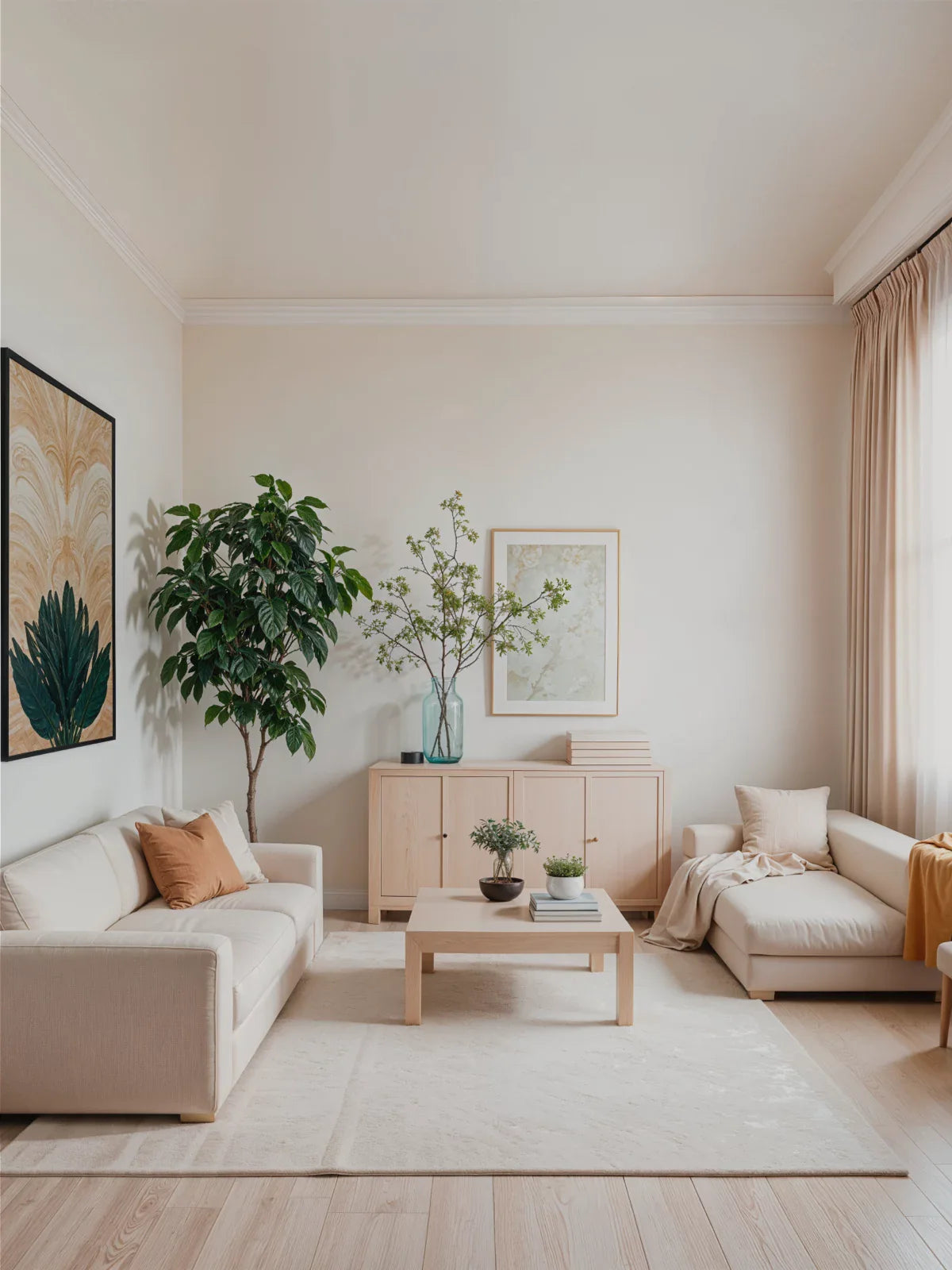
Living Room Rug Size Guide: Choose the Right Dimensions
Choosing the right living room rug size might seem straightforward, but it's one of the most impactful decisions you'll make when furnishing your space. A rug that's too small can make a room feel fragmented and unfinished, while one that's too large can overwhelm the space and create awkward furniture arrangements. The key is understanding how rug dimensions work together with your room layout, furniture pieces, and the visual balance you want to achieve. This guide walks you through the process of measuring your living room, understanding different furniture placement approaches, and selecting a rug size that anchors your seating area and enhances the entire room.
Why Living Room Rug Size Matters
A well-chosen rug does far more than add color or pattern to your living room. It defines the seating area, creates visual continuity, and influences how the entire room feels. The right size rug pulls your furniture grouping together and establishes a sense of proportion and balance. Conversely, a poorly sized rug can make even a beautifully furnished living room feel disjointed and cramped.
The living room rug size guide starts with recognizing that rug selection is deeply connected to furniture arrangement. Your sofa dimensions, the placement of accent chairs and coffee tables, and the overall room layout all influence which rug size will work best. Rather than selecting a rug based purely on room dimensions, the most successful approach considers how the rug relates to your seating furniture and how you want to position that furniture within the space.
How to Measure Your Living Room Before Choosing a Rug
Accurate measurements are the foundation of smart rug selection. Start by measuring your living room's length and width using a tape measure, and note these dimensions. Next, measure the key furniture pieces you'll be arranging on the rug: the length of your sofa, the width of your coffee table, the depth of armchairs, and any other seating elements. Write down all measurements in both feet and inches so you can reference them while shopping.
Pay particular attention to the space where you want the rug to sit. If your living room has architectural features like a fireplace, windows, or an open connection to other rooms, these should factor into your decision. Identify your primary seating area, which typically centers on the sofa and coffee table. This is the zone where the rug will anchor your furniture grouping.
Measure the distance from your sofa to the TV unit or focal point, and note the width of your seating area from one side to the other. These measurements help you understand the proportions you're working with and guide you toward appropriately sized rugs.
Understanding the Three Main Furniture Placement Approaches
Once you understand your room dimensions and furniture sizes, you can choose how you want to position your furniture in relation to the rug. There are three primary approaches, each with distinct visual and practical effects.
Approach 1: All Furniture Legs on the Rug
This arrangement places all legs of the sofa, armchairs, coffee table, and side tables directly on the rug. It creates a cohesive, unified seating zone and works well in larger living rooms where you have adequate space. All furniture feels anchored to the rug and to each other, creating a composed and intentional look.
Advantages: Visually unifies the entire seating area; creates a complete, finished appearance; works especially well in formal or traditional living rooms.
Limitations: Requires a larger rug to accommodate all furniture while maintaining appropriate margins at the room's edges; may not be practical in smaller spaces where a large enough rug would consume too much of the room.
Approach 2: Front Furniture Legs on the Rug (Partial Placement)
In this common arrangement, the front legs of the sofa and primary seating furniture rest on the rug, while the back legs may sit off the rug or extend beyond it. The coffee table and side tables typically sit fully on the rug. This approach balances visual unity with practicality and works across a wide range of room sizes.
Advantages: Works well in most room sizes; creates a defined seating area without requiring an oversized rug; allows flexibility in furniture arrangement; easier to transition from the rug to surrounding floor space.
Limitations: Furniture arrangement must be deliberate to look intentional rather than accidental; back legs of the sofa may appear to "float" if not carefully considered.
Approach 3: All Furniture Legs off the Rug
This arrangement floats the rug beneath the coffee table and seating area while keeping all furniture legs positioned on the surrounding floor. The rug becomes a focal point within the room rather than a base for furniture placement. This approach works best in larger living rooms and creates a contemporary, spacious aesthetic.
Advantages: Creates a sense of openness; works well in minimalist or modern living rooms; allows the rug to become a design statement; suitable for smaller rugs in larger spaces.
Limitations: Requires confident spatial planning to avoid looking unintentional; works best only in rooms large enough to accommodate this visual separation; the rug may feel disconnected from the furniture if the proportions aren't carefully considered.
Living Room Rug Size Comparison and Selection
The table below shows common rug dimensions and how they typically work in different room layouts. Remember that your choice depends not only on room size but also on your furniture dimensions and which placement approach you prefer.
| Rug Size | Best For | Room Type | Typical Furniture Arrangement |
| 2' x 3' (60 x 90 cm) | Accent under coffee table only | Very small spaces, studio apartments | Coffee table legs on rug; sofa and chairs off rug |
| 3' x 5' (90 x 150 cm) | Small living rooms or seating nooks | Compact apartments, small rooms | Sofa front legs and coffee table on rug; accent chairs off rug |
| 4' x 6' (120 x 180 cm) | Most living rooms; versatile size | Average living rooms, standard furniture layouts | Sofa front legs and all primary furniture on rug; chairs may extend slightly beyond |
| 5' x 7' (150 x 210 cm) | Larger living rooms, sectional sofas | Spacious living rooms, open-plan areas | All furniture legs on rug or front-leg placement in spacious layouts |
| 5' x 8' (150 x 240 cm) | Large living rooms with ample space | Expansive rooms, formal living areas | All furniture legs on rug; comfortable margins around seating area |
| 6' x 9' (180 x 270 cm) | Large living rooms, comprehensive coverage | Spacious living areas, defined seating zones | All furniture fully anchored on rug with visible floor around perimeter |
Furniture Placement Comparison and Positioning Guide
The following table explains how each furniture placement approach works in practice and what rug sizes typically support each method.
| Placement Approach | Which Legs Go on Rug | Visual Effect | Recommended Rug Sizes | Best Room Conditions |
| All legs on rug | Sofa, chairs, coffee table, side tables | Cohesive, unified seating zone; formal appearance | 5' x 7' (150 x 210 cm), 5' x 8' (150 x 240 cm), 6' x 9' (180 x 270 cm) | Larger living rooms with adequate space; formal or traditional decorating styles |
| Front legs on rug | Sofa and chair front legs; typically all table legs | Balanced, practical; defined seating without overwhelming the space | 3' x 5' (90 x 150 cm), 4' x 6' (120 x 180 cm), 5' x 7' (150 x 210 cm) | Most living rooms; works across traditional, transitional, and contemporary styles |
| All legs off rug | None; rug floats beneath seating area | Contemporary, spacious; rug functions as a focal point | 3' x 5' (90 x 150 cm), 4' x 6' (120 x 180 cm) | Larger rooms where rug can float; modern or minimalist interiors; design-forward arrangements |
Measuring Your Seating Area and Calculating Rug Size
Rather than relying solely on room dimensions, focus on the dimensions of your seating arrangement. This is where the rug's actual sizing decision is made.
- Measure your sofa length. Include any end cushions or arms. For a sectional sofa, measure the entire width of the L-shape or U-shape.
- Measure your coffee table. Note both length and width. Most coffee tables range from 3' to 4' (90 to 120 cm) in length.
- Measure the distance from the sofa to the TV unit or focal wall. This tells you the depth your rug needs to accommodate.
- Account for accent chairs or side seating. If you're placing armchairs on either side of the sofa, measure their width to understand the total width of your seating zone.
- Add margins. Most designers recommend 18 to 24 inches (45 to 60 cm) of visible floor space on all sides of the rug (or between the rug and walls). This prevents the rug from appearing cramped and allows the space to breathe.
Example calculation: If your sofa is 8 feet (240 cm) long, your coffee table extends 3 feet (90 cm) beyond it, and you want 24 inches (60 cm) of margin on each side, you'd need a rug roughly 10 to 11 feet (300 to 330 cm) in width. However, since Bella Rugs' maximum rug size is 6' x 9' (180 x 270 cm), you might need to reconsider your furniture arrangement, opt for a front-leg placement approach, or accept that your available rug sizes may provide partial rather than complete coverage of the seating area. This is completely normal and doesn't mean the rug won't look great.
Rug Size Guide by Room Layout
Different room sizes and layouts call for different approaches. Use this guide to see how rug sizing adapts to your specific living room type.
| Room Type and Size | Recommended Rug Size | Furniture Placement Approach | Key Considerations |
| Small living room (10' x 12' / 300 x 360 cm or smaller) | 3' x 5' (90 x 150 cm) or 4' x 6' (120 x 180 cm) | Front legs on rug or accent placement | Choose rug placement carefully to avoid making the room feel smaller; use lighter colors or small patterns; ensure walking paths remain clear; consider that a full "all legs on rug" approach may not be feasible |
| Medium living room (12' x 16' / 360 x 480 cm) | 4' x 6' (120 x 180 cm) or 5' x 7' (150 x 210 cm) | Front legs on rug (most versatile) or all legs on rug | This size typically accommodates most sofa and sectional sizes comfortably; allows flexibility in furniture arrangement; provides good visual balance in the room |
| Large living room (16' x 20' / 480 x 600 cm or larger) | 5' x 7' (150 x 210 cm), 5' x 8' (150 x 240 cm), or 6' x 9' (180 x 270 cm) | All legs on rug or front legs on rug | You have flexibility to choose your preferred approach; ensure the rug is large enough to feel anchored within the space and not undersized; consider dividing the space with rugs if it includes multiple seating zones |
| Open-plan living and dining area | 5' x 7' (150 x 210 cm) or 5' x 8' (150 x 240 cm) | Front legs on rug or all legs on rug (depending on furniture layout) | Position the rug to define the living area separate from the dining space; ensure the rug sits comfortably within the living zone without extending into the dining area; allows visual separation while maintaining flow |
How Much Floor Space Should Show Around Your Living Room Rug
The amount of visible floor surrounding your rug directly affects how the space feels. Too little margin makes the rug appear cramped and awkwardly sized. Too much margin can make the rug feel disconnected from your furniture.
Most interior designers recommend 18 to 24 inches (45 to 60 cm) of visible floor on all sides of the rug where it meets walls or open space. In front of the sofa or toward the focal point of the room, you might have more floor visible if you're using the front-legs-on-rug approach. Behind the sofa or in transitional areas, less floor space is acceptable.
In very small living rooms, even 18 inches (45 cm) of margin may feel like a luxury. If your space is extremely tight, 12 inches (30 cm) of margin can work, but measure carefully to ensure the rug doesn't look undersized relative to your furniture.
Selecting the Right Rug Size for Small Living Rooms
Small living rooms require thoughtful rug selection to avoid creating a cramped or fragmented appearance. Start by measuring your seating area carefully and accepting that your rug may not accommodate all furniture with complete coverage.
For rooms under 12' x 12' (360 x 360 cm), a 3' x 5' (90 x 150 cm) or 4' x 6' (120 x 180 cm) rug is typically the better choice. Position it so the sofa's front legs sit on the rug, with the coffee table fully supported. This creates a defined seating zone without making the room feel overtaken by the rug.
Use color and pattern strategically. Lighter colors, subtle patterns, and limited color palettes tend to make small rooms feel more open. Bold, large-scale patterns can overwhelm a compact space. A rug with a border can help define the seating area without requiring maximum dimensions.
Ensure clear walking paths around the rug. In small spaces, traffic flow matters tremendously. The rug should enhance the layout rather than obstruct natural movement through the room.
Rug Placement in Open-Plan Living and Dining Areas
Open-plan spaces present unique rug-sizing challenges because you're essentially furnishing two zones with one visual space. The rug should define the living area without blocking access to the dining space.
Position the rug so it sits entirely within the living area, with the sofa's back edge at the farthest point from the dining space. Typically, a 5' x 7' (150 x 210 cm) or 5' x 8' (150 x 240 cm) rug works well for these layouts. The rug creates a visual boundary between the two zones and anchors the seating arrangement.
Avoid positioning the rug so that it extends partway into the dining area. This creates visual confusion and makes both zones feel smaller. The rug should clearly belong to the living area, with at least a few feet of unrugged floor serving as a transition to the dining space.
If your open plan is very large, you might consider two separate rugs: one anchoring the living seating area and another defining the dining table space. This approach clearly delineates both zones and can be more effective than trying to find one rug that works for both.
Positioning Your Rug in Relation to Sofas, Coffee Tables, and Other Furniture
Once you've chosen your rug size and decided on a placement approach, the specific positioning of individual furniture pieces matters for balance and functionality.
Sofa and Rug Placement
If using the front-legs-on-rug approach, position the sofa so its front legs sit 4 to 6 inches (10 to 15 cm) onto the rug. This creates an obvious connection between the sofa and the rug without requiring the entire piece to sit on the rug. If using all-legs-on-rug, ensure every leg is fully supported by the rug material.
Coffee Table Positioning
The coffee table should sit fully on the rug, positioned 12 to 18 inches (30 to 45 cm) from the sofa's edge. This distance provides comfortable legroom while keeping the table visually connected to the rug. If your rug is a 4' x 6' (120 x 180 cm), the table's position matters tremendously in making the overall layout feel balanced.
Accent Chairs and Side Seating
Place accent chairs at an angle or perpendicular to the sofa, with at least the front legs sitting on the rug. Side chairs flanking the sofa can have one leg off the rug if your space is limited, but both front legs should sit on the rug's surface.
Side Tables and End Tables
Side tables next to accent chairs should sit fully on the rug if they're being used as part of the seating grouping. End tables flanking the sofa can have one leg off the rug, or both legs on the rug depending on your layout and rug size.
TV Unit Positioning
Your TV unit or entertainment center typically sits on the floor, off the rug, serving as the room's focal point. Position it so the seating area faces it comfortably. The rug should not extend under the TV unit; instead, it should create a separation between the seating area and the focal wall.
Rug Shape and Its Effect on Perceived Room Proportions
Beyond size, the shape of your rug influences how your living room looks and feels.
Rectangular Rugs
Rectangular rugs are the most versatile for living rooms and work well in virtually any space. They naturally align with furniture arrangements and room architecture. A 4' x 6' (120 x 180 cm) or 5' x 7' (150 x 210 cm) rectangular rug is the standard choice for most living rooms.
Square Rugs
Square rugs work well in more compact or symmetrical living rooms. A square rug can emphasize equal proportions and works especially well if your seating is arranged in a square or U-shape rather than oriented toward a single focal point. They're less common in living rooms than rectangles but can be striking in the right layout.
Round Rugs
Round rugs soften the angular geometry of a living room and work well as accent pieces or in spaces with curved furniture. However, they typically don't anchor large seating arrangements as effectively as rectangular rugs. If you choose a round rug, expect it to define the coffee table and immediate seating area rather than providing comprehensive coverage for an entire furniture grouping.
Runner Rugs
Narrow runner rugs can define a transitional space between your living and dining areas but aren't ideal for anchoring an entire seating arrangement.
How Rug Color, Pattern, Borders, and Orientation Affect Room Perception
A rug's visual characteristics influence how the room's proportions are perceived.
Color: Lighter-colored rugs make spaces feel larger and more open. Darker rugs can make rooms feel cozier but may visually reduce the perceived size. In small living rooms, lighter or neutral-toned rugs typically feel more spacious.
Pattern: Large, bold patterns draw attention and can make rooms feel smaller. Small, subtle patterns or solid colors recede visually and allow the architecture and furniture to be the focal points. For small rooms, consider understated patterns or solid colors.
Borders: Rugs with defined borders create visual framing and can make the seating area feel more intentional and enclosed. In smaller spaces, borders can emphasize the rug's boundaries without requiring a larger overall dimension.
Orientation: Positioning a rectangular rug lengthwise into the room (rather than across it) can make the space feel longer. Positioning it across the width can emphasize the room's breadth. Consider your room's proportions and whether you want to visually extend or balance them.
Practical Considerations: Stability, Traffic Flow, Cleaning, and Maintenance
Beyond aesthetics and spatial proportions, practical factors matter for living room rug selection.
Furniture Stability
Ensure your rug provides stable support for furniture legs. A rug that shifts under furniture creates safety hazards and looks untidy. Use a non-slip rug pad underneath your rug to anchor it and prevent movement. This is especially important if you have children, pets, or high foot traffic.
Walking Paths and Traffic Flow
Clear walking paths are essential in any living room. Ensure your rug placement doesn't obstruct doorways or natural traffic patterns. People should be able to move through the room comfortably without having to step over or around the rug awkwardly.
Cleaning and Maintenance
Choose a rug material and color that suits your household's lifestyle. High-traffic living rooms with children or pets benefit from durable, washable rugs that can handle spills and frequent cleaning. Lighter colors show dirt and stains more readily but can be easier to keep looking fresh if you select a washable option. Darker colors hide marks better but may require deeper cleaning less frequently.
Consider rug dimensions that allow you to shake out or vacuum thoroughly. Larger rugs are harder to manage for cleaning purposes, so be realistic about your maintenance capacity.
Common Living Room Rug Sizing Mistakes and How to Avoid Them
Understanding what not to do can be as helpful as knowing what to do.
Mistake 1: Choosing rug size based only on room dimensions. A living room that's 14' x 16' (420 x 480 cm) doesn't automatically require a rug of specific dimensions. The furniture size and arrangement matter far more. A room this size might work beautifully with a 4' x 6' (120 x 180 cm) rug if the furniture is appropriately scaled, or it might need a 5' x 7' (150 x 210 cm) rug if the seating arrangement is large and spread out.
Mistake 2: Buying a rug that's too small. Many people underestimate their rug size needs and end up with a rug that looks like an island floating in the middle of the room. If your furniture grouping spans 10 feet (300 cm) in width and depth, a 3' x 5' (90 x 150 cm) rug will appear undersized. Err on the side of a slightly larger rug rather than too small.
Mistake 3: Ignoring the relationship between rug size and sofa length. Your rug should be at least as wide as your sofa (or wider, depending on your approach). If your sofa is 8 feet (240 cm) long, your rug should be at least that wide to maintain visual proportion. A rug significantly narrower than your main seating piece will look out of balance.
Mistake 4: Positioning the rug too far from the sofa. If there's a large gap of exposed floor between the sofa and the rug's edge, the two pieces feel disconnected. Aim for the sofa's front legs to sit on or very close to the rug's edge. This ties the furniture to the rug and creates a cohesive seating arrangement.
The best rug size is the one that anchors your sofa and primary seating while maintaining clear walking paths and visual balance in your room. Rather than searching for a single "perfect" rug dimension, focus on how the rug relates to your furniture and your living space's layout.
Mistake 5: Overlooking furniture stability. A rug that shifts under furniture is impractical and unsafe. Always use a non-slip rug pad, especially if you have hardwood or tile flooring.
FAQ: Living Room Rug Size and Placement Questions
What size rug should I get for a sectional sofa?
For a sectional, measure the total width and depth of the L-shape or U-shape. You typically need a larger rug to accommodate the full footprint. A 5' x 7' (150 x 210 cm) or 5' x 8' (150 x 240 cm) rug often works well, depending on the sectional's dimensions. Position the rug so the front legs of the main pieces sit on it, creating a unified seating zone.
Can I use a small rug in a large living room?
Yes, but intentionally. A 4' x 6' (120 x 180 cm) rug in a spacious living room can work if you're using the "all furniture legs off the rug" approach or if you're deliberately floating the rug beneath a single seating grouping. However, if the rug looks undersized relative to the furniture and room, the arrangement may feel unintentional or unfinished. Choose this approach deliberately, not by default.
Should all furniture legs be on the rug?
Not necessarily. It depends on your room size and furniture arrangement. The front-legs-on-rug approach is more common and works in most spaces. The all-legs-on-rug approach requires larger rugs and works better in spacious living rooms. Choose whichever approach best suits your room layout and furniture dimensions.
How much floor should show around my living room rug?
Aim for 18 to 24 inches (45 to 60 cm) of visible floor where the rug meets the walls or room edges. This creates visual breathing room without making the rug feel disconnected from the space. In very small rooms, 12 to 15 inches (30 to 40 cm) may be acceptable if a larger margin isn't feasible.
What's the best rug size for a small living room?
A 3' x 5' (90 x 150 cm) or 4' x 6' (120 x 180 cm) rug typically works best in small living rooms. Choose based on your sofa length and seating arrangement. Ensure the rug doesn't consume the entire space visually, and use the front-legs-on-rug approach to maintain clear walking paths.
Can I use a rug in an open-plan living and dining area?
Yes. Position the rug entirely within the living zone, not extending into the dining area. A 5' x 7' (150 x 210 cm) or 5' x 8' (150 x 240 cm) rug typically defines the seating area while maintaining a clear visual and physical separation from the dining space. If your open plan is very large, consider two separate rugs for each zone.
Conclusion
Selecting the right living room rug size comes down to understanding your room layout, measuring your furniture carefully, and choosing a placement approach that works for your space and lifestyle. There's no universal "perfect" rug size; instead, the best choice is the one that anchors your seating, maintains visual balance, and supports how you actually live in the room.
Start by measuring your seating area, including your sofa, coffee table, and accent pieces. Consider whether you prefer having all furniture legs on the rug, only front legs on the rug, or floating the rug beneath the seating area. Use the rug size comparison tables provided to narrow your options, then visualize how each size would work within your space's proportions and furniture arrangement.
Remember that 18 to 24 inches (45 to 60 cm) of visible floor around the rug creates the most pleasing visual balance. A rug that's slightly larger than you initially think often works better than one that's too small. In tight spaces, don't hesitate to embrace the front-legs-on-rug approach, which requires a smaller rug while still creating a cohesive seating arrangement. And don't overlook practical considerations like furniture stability, walking paths, and how your rug's color and pattern will perform in your household over time.
With your room dimensions, furniture measurements, and a clear sense of your preferred placement approach, you're ready to choose a rug that looks beautiful, functions well, and transforms your living room into a balanced, inviting space.
Spring Clean Area Rugs: Complete Cleaning Guide
Hallway Runner Size Guide: Choose the Right Fit
Related Posts

Modern Rugs: Styles, Designs & How to Choose

What Is Shabby Chic Rug Style?

Entryway Rug Size Guide: Architecting the Perfect First Impression

Kitchen Runner Size Guide: Ergonomics for the Culinary Workspace

Dining Room Rug Size Guide: The Mechanics of a Perfect Fit

Bedroom Rug Size Guide: Crafting a Restorative Sanctuary